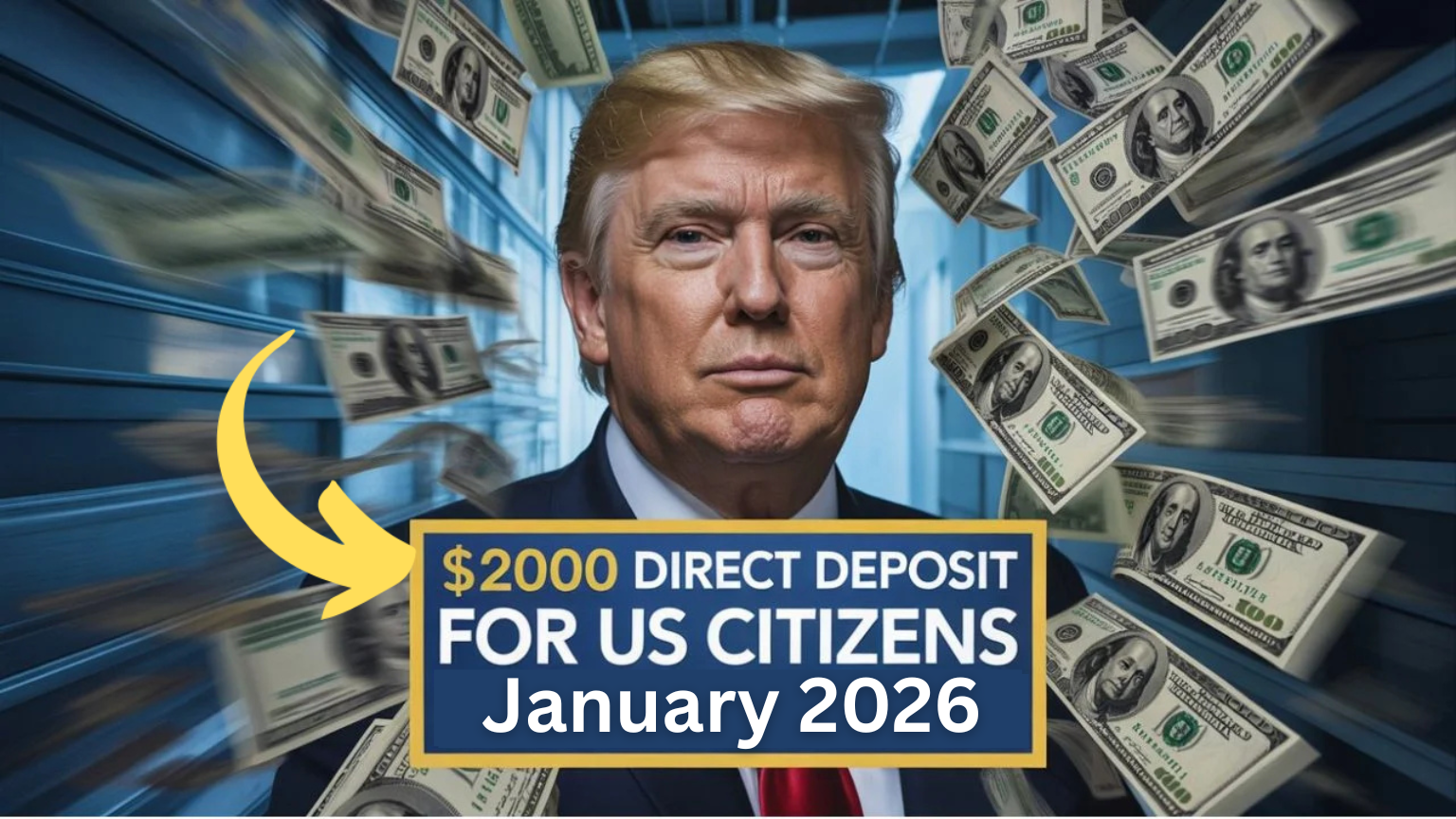
There’s a lot of online buzz about a $2,000 Federal Direct Deposit payment in January 2025, but the reality is a bit different from what’s being shared in viral posts. In this guide, we’ll explain what’s actually happening, who might be eligible for payments, what isn’t happening, and how you can protect yourself from misleading claims.
The Truth: Federal Payments in Early 2025
Currently, no official federal stimulus payment of $2,000 for January 2025 has been authorized by Congress or the IRS. Major fact-checking organizations emphasize that no new federal stimulus checks have been approved, and claims circulating online about automatic $2,000 direct deposits are false or based on rumors.
The last federal relief payments related to the pandemic were distributed in 2021. Later, in late 2024 and early 2025, the IRS sent out “catch-up” payments of up to $1,400 to eligible taxpayers who had forgotten to claim certain tax credits – but these were not part of any new universal stimulus program.
Why The Confusion?
There’s been ongoing discussion in political circles — particularly regarding the proposed $2,000 tariff-funded dividend — but this is currently just a proposal. It has not been enacted into law, and the federal government has no legal authority to issue $2,000 checks on this basis alone.
Social media posts, screenshots of pending deposits, and memes claiming “government announcements” often spread rapidly, but fact-checkers repeatedly warn that these are unverified or false. The IRS has not added any new stimulus checks to its official payment calendar, and there is no application or claims portal for a $2,000 payment.
What Could Be Happening?
While there is no current federal stimulus program issuing $2,000 checks in January 2025, some groups of Americans have other legitimate ways of receiving payments that might resemble a federal deposit:
- Tax refunds or credits — If you are due a refund or tax credit from a recent return, the IRS may send the money directly to your account.
- Social Security, SSI, or VA benefits — These recurring benefit payments may appear in your account via electronic deposit.
- State-level relief or rebates — Some states offer their own one-time payments or rebates that may be sent via direct deposit.
None of these are part of a new federal stimulus program issuing $2,000 checks.
How to Check for Your Payment Correctly
If you’re waiting for a federal payment, it’s crucial to get information from official government sources, not social media:
- IRS.gov — Check the status of your payment using IRS tools like “Where’s My Refund?”
- SSA.gov — View your Social Security or SSI payment schedule.
- VA.gov — Verify your VA benefit deposits.
Federal agencies will not send emails or texts asking for personal information to “unlock” payments. If you receive a suspicious message, do not provide bank details or your Social Security number.
Scam Awareness
Because misleading posts often circulate this time of year, the IRS and fact-checkers are issuing strong warnings about:
- Texts or emails claiming you’ll receive a $2,000 check if you click a link
- “Official” PDFs or graphics that are not actually from a .gov website
- Ads or videos telling you how to “claim your payment” by paying a fee
If something sounds too good to be true — it probably is. Always confirm through official channels.
Frequently Asked Questions (FAQs)
Q 1: Is the federal government sending out a $2,000 direct deposit in January 2025?
Ans: No. To date, no federal stimulus program has been approved that would provide eligible Americans with a $2,000 direct deposit in January 2025. Contrary to online rumors, this claim has been debunked in multiple fact-checks.
Q 2: What payment schedules are currently in effect?
Ans: Only regular tax refunds, Social Security/benefit payments, or state/local approved relief programs. No universal federal stimulus checks are currently being issued.
Q 3: Do I need to sign up or fill out a form to receive this payment?
Ans: Because there are no federal stimulus payments, there is nothing to sign up for. If you are expecting a government refund or benefit, make sure your information is up-to-date with the relevant agency.
Q 4: How can I tell if a payment notification is a scam?
Ans: The IRS will never ask for personal information via unsolicited email or text message. Official notifications come directly through the mail or via a secure online government account.
Q 5: Could a $2,000 payment be approved later?
Ans: Yes, if Congress passes new legislation and funds a program. However, no such legislation has been passed yet.